Breaking Boundaries: A Revolution in Higher Education at Georgia State
- 20slavin5
- Apr 12, 2024
- 3 min read
Updated: Apr 15, 2024
Georgia State University, located in Atlanta, serves as an example reflecting the challenges prevalent in American higher education. Over the past decade, the university's demographics have undergone significant shifts.
The proportion of Pell Grant–

eligible students has surged from approximately 30 percent to 60 percent of the student body, while the ratio of white students to students of color has reversed from 60/40 to 40/60. Concurrently, state funding for higher education has dwindled. As a large, non-elite, non-flagship urban public university striving to
achieve more with fewer resources while catering to students from less privileged backgrounds, Georgia State epitomizes the landscape of higher education in 2016.
Given these shifts, you would expect Georgia State’s academic results to have suffered—after all, research shows a tight negative correlation between a low-income student population and graduation rates. Yet the opposite has happened, thanks to the university’s “Student Success Collaborative,” initiated in 2012 and headed by Renick. (Last year, we wrote about university president Mark Becker.) The initiative, which has become a model for other schools trying to improve student outcomes, encompasses more than a dozen different programs, including pre–freshman year summer sessions, redesigned introductory math curriculum, and micro-grants for students in need of a few hundred bucks to make it through the semester. The centerpiece is the enthusiastic embrace of predictive analytics, which means using historical data to determine the telltale signs of when students are in need of targeted interventions. A student who gets a C in an intro course in her intended major, for example, is statistically very unlikely to graduate. But traditionally, the only feedback she would get would be from the grade itself, which says: “You passed.” Now, through predictive analytics, warning flags like that C grade trigger interventions in which advisers give students the information they need to get back on track. In the last year, for instance, the system has helped 2,000 students who picked the wrong course for their requirements switch into the right one. In the past, they wouldn’t have known about their wasted time and money until after the semester was over. That can mean the difference between graduating and dropping out, since financial aid packages only cover so many credits.
It’s hard to overstate the project’s impact. Georgia State now confers 30 percent more bachelor’s degrees than it did five years ago. The overall graduation percentage has risen from the low 30s to the low 50s. Most remarkably, the racial achievement gap has vanished—in fact, black and Hispanic students now graduate at higher rates than white students, and Georgia State confers more bachelor’s degrees to African Americans than any other school in the country, including historically black colleges.
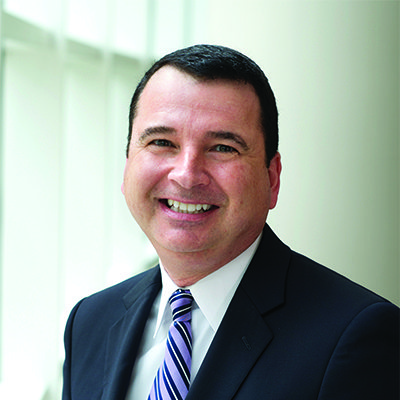
Timothy M. Renick

Graduation percentage has risen from the low 30s to the low 50s
And, according to Renick, the reforms more than pay for themselves. Each percentage improvement in student retention brings in $3.1 million in gross revenue. That means there’s no excuse for other universities not to do what Georgia State is doing. And many are. Examples include Delaware State University, a struggling public historically black college where chief operating officer Teresa Hardee has put together a leadership team that “completely understands that it’s more financially advantageous for the university to retain students than to lose them,” notes Daniel Greenstein of the Gates Foundation, which is supporting DSU’s predictive analytics efforts.
Renick describes predictive analytics as “simply a way to level the playing field.” Students whose parents or siblings went to college have the benefit of an “invisible support system” that first-generation students lack, which helps them overcome obstacles that are frequently of the university’s own making. Renick sees his efforts as fundamentally about removing those obstacles. “When we began to deal with those problems systematically,” he says, “what we found is a lot of these achievement gaps just evaporated.




Comments